
Rooftop solar installations need not be limited to a simple arrangement of photovoltaic panels. With thoughtful design, rooftops can be transformed into multifunctional systems that generate energy while supporting vegetation and improving the rooftop microclimate.
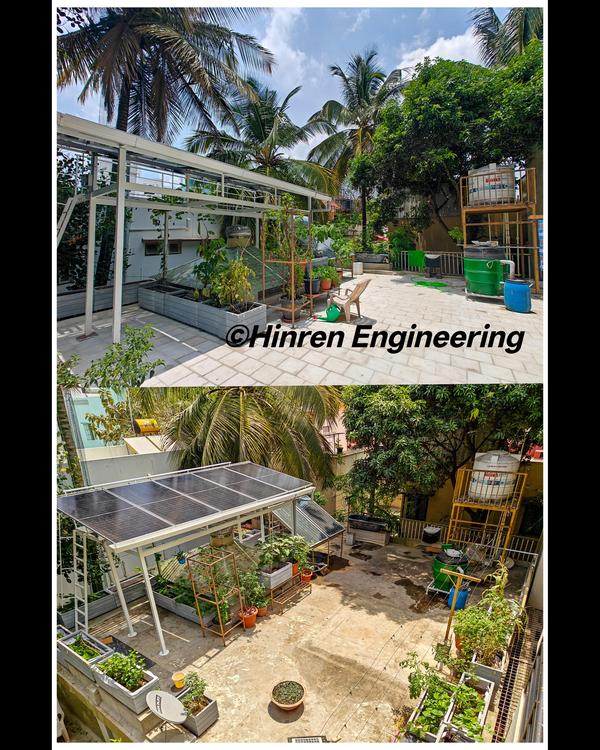
An elevated solar structure engineered with minimal or no intermediate columns creates unobstructed space below the array, allowing for easy movement, maintenance, and plant growth.
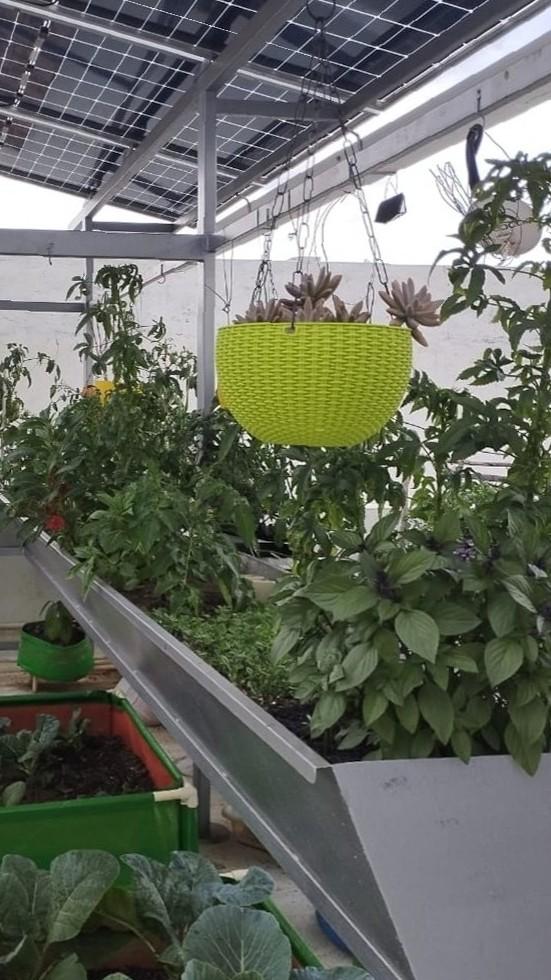
Walkways and optimized panel spacing permit filtered sunlight to reach the roof surface, preventing complete shading. The resulting microclimate—characterized by moderated temperatures and slightly higher humidity beneath the panels—when combined with bushy or foliage crops, is well suited for growing leafy vegetables and shade-tolerant plants, particularly in hot urban environments.
This approach, often referred to as Rooftop Agrovoltaics (or Agri-voltaics), integrates solar energy generation and agriculture on the same rooftop footprint. Beyond energy and food co-production, such systems help reduce rooftop heat gain and contribute to mitigating urban heat island effects by lowering surface temperatures, reducing heat re-radiation, and introducing active evapotranspiration through vegetation.
Within the Sustenance Roof framework, rooftop agrovoltaics demonstrate how rooftops can evolve from passive surfaces into productive infrastructure—supporting clean energy, urban food production, and climate resilience simultaneously.
Keywords