
The rooftop is one of the most underutilized spaces in our cities — yet it holds enormous potential for sustainability, food security, and climate action.
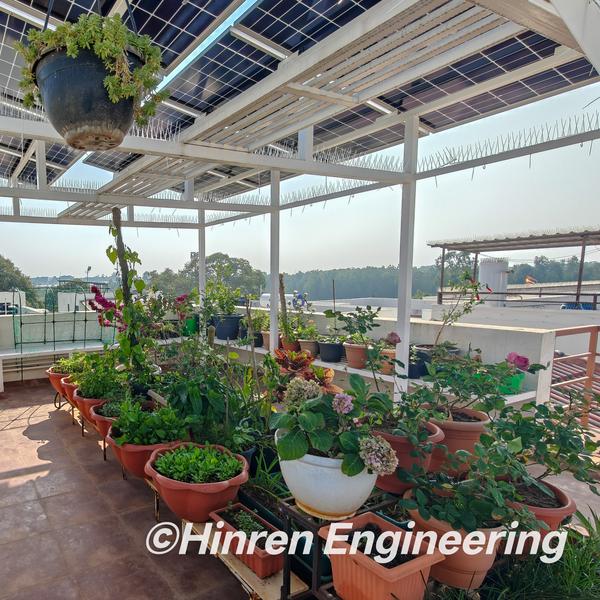
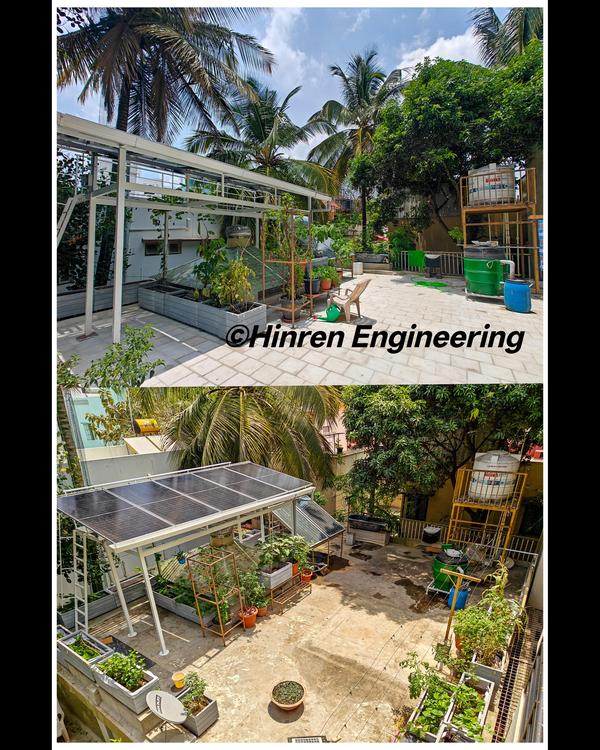
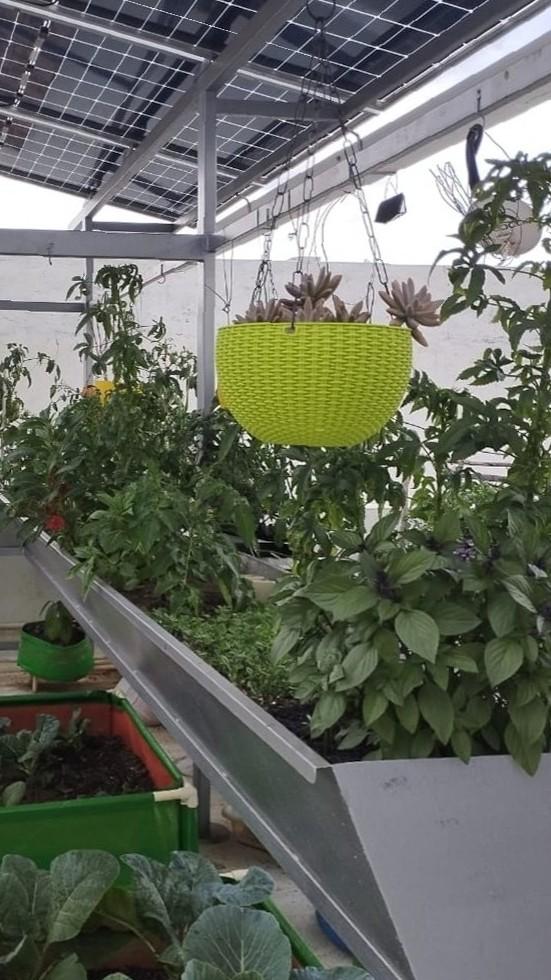
With thoughtful design, a solar panel mounting structure can do much more than just generate electricity. The space beneath can be transformed into a productive permaculture zone:
Vegetable cultivation in the partial shade beneath panels — perfect for crops like cauliflower, lettuce, and other foliage plants.
Vertical supports doubling as trellises for climbers such as bitter gourd and ridge gourd.
Tie beams holding hanging pots with pollinator-friendly and pest-repellent plants liken chrysanthemum and marigold.
Beyond food production, this approach tackles a critical urban challenge — the Urban Heat Island (UHI) effect. Dark, heat-absorbing roofs intensify heat retention, which not only worsens city temperatures but also disrupts local weather patterns, leading to high-intensity rainfall and urban flooding.
Replacing these heat traps with light-coloured solar structures and vegetation cools the roof surface, improves the microclimate, and mitigates UHI impacts.
By merging renewable energy, urban agriculture, and climate resilience, rooftops can become self-sustaining hubs — powering homes, feeding families, cooling cities, and reducing flood risks.
The future of climate-conscious cities can start from the top down — with our roofs.
Keywords